
Why Companies Realize That Adventure‑Inspired Training Creates Lasting Confidence in Employees
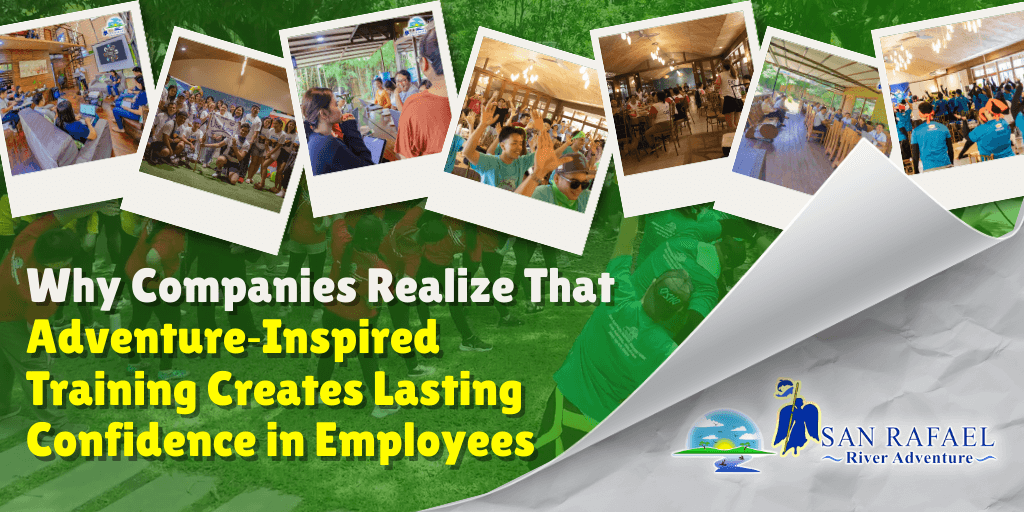
Forget the stale coffee and fluorescent lights of traditional seminars. Forward-thinking companies are ditching the conference room for the great outdoors, swapping PowerPoint slides for climbing harnesses and kayaks.
But this isn’t just a corporate getaway; it’s a strategic shift. Leaders are realizing that adventure-inspired training does something a lecture never could: it builds a brand of “battle-tested” confidence that sticks.
The “Comfort Zone” Paradox
Most professional development stays safely within the “comfort zone.” While employees might learn a new software or a communication framework, they aren’t being fundamentally challenged.
Adventure-inspired training operates on the principle of Managed Risk. When an employee stands at the edge of a zip line or navigates a rapid, they experience a genuine physiological response. Overcoming that biological “fear” creates a neural shortcut to confidence.
Why It Works: The Science of “Doing”
- Neuroplasticity: High-stakes (but safe) environments trigger the release of dopamine and adrenaline, which helps encode new memories and skills more deeply than sitting in a chair.
- Immediate Feedback: In the woods or on a rock face, the feedback is instant. If you don’t communicate clearly with your belayer, you don’t move. This beats a performance review six months down the line.
- Authentic Vulnerability: You can’t “corporate speak” your way out of a physical challenge. Seeing a manager show grit or a junior employee take the lead levels the playing field, building deep-seated trust.
The Three Pillars of Lasting Confidence
How exactly does a weekend in the wild translate to a Monday morning win? It comes down to three core shifts:
1. The “I Can” Catalyst
When an employee accomplishes something they previously thought was physically or mentally impossible, their internal monologue changes. The thought “I can’t lead this project” is silenced by the memory of “I navigated a mountain trail in a storm.”
2. Radical Accountability
In adventure training, every team member has a role that matters. If the navigator loses the map, the whole team stalls. This creates a sense of ownership that is often missing in large corporate structures. Employees return to the office realizing that their individual contribution is vital.
3. Stress Inoculation
By practicing decision-making under physical stress, employees develop “stress inoculation.” They become calmer during high-pressure board meetings because they’ve already mastered the art of keeping a cool head when things get messy.
Bringing the Adventure Home
You don’t necessarily need to fly the whole team to the Alps to see results. Companies are integrating these principles through:
- Urban Challenges: Scavenger hunts that require complex navigation and strategy.
- Tactical Simulation: High-pressure “escape room” style scenarios that mimic project deadlines.
- Wilderness Retreats: Multi-day treks focused on self-reliance and group cohesion.
The Bottom Line: Confidence isn’t something you can teach; it’s something you have to earn. Adventure-inspired training allows employees to earn that confidence in a way that creates a permanent shift in how they view their own potential.
Level Up in Bulacan: Where High-Stakes Adventure Meets High-Performance Results
Escape the boardroom grind without the long commute. San Rafael River Adventure are meticulously designed to turn team bonding into a strategic advantage. Through expert program design and full-service support, we provide the tools your leaders need to excel—ensuring your team returns more cohesive, confident, and driven than ever before.
 Contact us today: +63 906 026 7988
Shape leaders. Unite teams. Achieve meaningful growth.