
Adventure‑Based Training vs. Traditional Seminars: The Productivity Gap
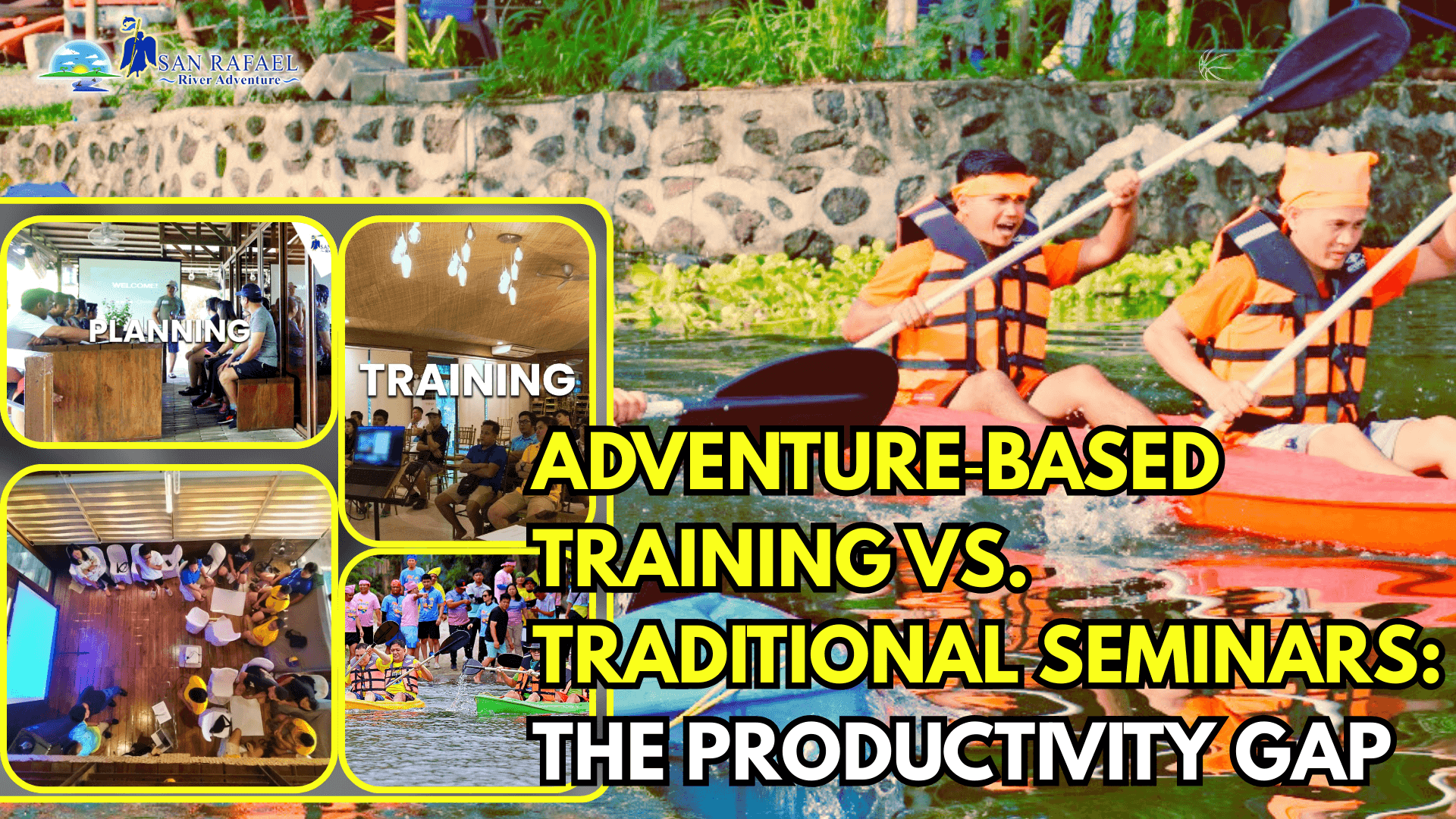
In today’s evolving workplace, corporate adventure-based training is gaining attention. Many organizations want better ways to improve productivity. However, many companies still rely on traditional seminars to develop employee skills. Because of this, questions arise about how effective these seminars really are. In other words, do traditional trainings improve real workplace performance?
As a result, more organizations now explore hands-on learning. In contrast to passive training, practical experiences clearly reveal a productivity gap. Overall, experiential training allows employees to practice skills they can use immediately on the job.
Traditional Seminars vs. Corporate Adventure-Based Training
Traditional seminars are usually conducted in classrooms, hotels, or conference venues. They offer a controlled environment where information can be shared efficiently.
Advantages of traditional seminars:
- Clear structure and organized content
- Effective for technical training and policy updates
- Easy to schedule and manage
However, traditional seminars have limitations:
- Participants often play a passive role
- Limited opportunity for hands-on practice
- Lower retention of lessons over time
Because learning is mostly theoretical, improvements in productivity may not be sustained after the session ends.
Corporate Adventure -Based Training: Productivity Through Experience
San Rafael River Adventure in Bulacan offers dynamic environments where learning happens through action. Activities are designed to simulate real workplace challenges, encouraging teams to think critically, adapt quickly, and work together.
Benefits of adventure-based training:
- Increasing engagement and participation
- Strengthening teamwork and communication
- Developing confidence in leadership and decision-making
- Enhancing long-term skill retention
Participants gain practical experience that they can immediately apply to their roles, resulting in more meaningful productivity gains.
Productivity Gap in Corporate Adventure-Based Training
The productivity gap between adventure-based training and traditional seminars lies in how learning is applied. Traditional seminars emphasize knowledge transfer, while adventure-based training focuses on skill development through real experience.
When employees actively practice skills rather than simply hearing about them, they are more likely to perform effectively, collaborate better, and remain motivated. This explains why experiential training often leads to stronger and longer-lasting productivity improvements.
Choosing the Right Corporate Training Method
Selecting the appropriate training approach depends on organizational goals:
- Traditional seminars: Suitable for compliance training, orientations, and technical instruction.
- Adventure-based training: Ideal for leadership development, team building, and performance improvement.
Organizations seeking higher engagement and sustained productivity often benefit more from experiential training programs.
Contact Information
For organizations interested in adventure-based corporate training programs at San Rafael River, Bulacan:
📧 Email: events@sanrafaelriveradventure.com
📞 Phone: 0999 504 0207 / 0906 026 7988
📍 Location: Brgy. Talacsan, San Rafael, Bulacan
Build stronger leaders, boost team collaboration, and create lasting impact with San Rafael River Adventure